Table of Contents
- That Musty Smell Might Not Be “Just Moisture”
- What Exactly Is Black Mold?
- Why NC Homes Are a Perfect Breeding Ground
- Where to Look for Black Mold in Your Home
- How to Identify Black Mold – Signs Most Homeowners Miss
- Black Mold Health Risks – Who Is Most at Risk?
- Can You Remove Black Mold Yourself?
- What Professional Black Mold Remediation Actually Looks Like
- How Much Does Black Mold Removal Cost in NC?
- Does Homeowners Insurance Cover Black Mold in NC?
- NC Mold Disclosure Laws – What Sellers and Buyers Must Know
- How to Prevent Black Mold from Coming Back
- Why NC Homeowners Trust KCS Restoration
- Frequently Asked Questions
- Your Next Step Starts Here
That Musty Smell Might Not Be “Just Moisture”
You walk into your basement after a rainy week in Fayetteville. There is that smell again. Earthy. Stale. A little sharp. You crack a window and tell yourself it is just the humidity.
But what if it is not?
Thousands of North Carolina homeowners make that exact mistake every year. They ignore the smell, the dark spot behind the washing machine, or the persistent cough that started a few months ago. By the time black mold is confirmed, it has already spread behind walls, into the HVAC system, and throughout the air their family breathes every day.
This guide is here to change that. If you live in an NC home and you have even the smallest suspicion, keep reading. You deserve the full picture, not just a surface-level answer.
Concerned right now? Call KCS Restoration at (910) 635-9348 for a free mold inspection in the Fayetteville area.
What Exactly Is Black Mold?
The Science Behind Stachybotrys Chartarum
Black mold refers specifically to Stachybotrys chartarum, a toxic fungus that feeds on materials rich in cellulose, like drywall, wood, and ceiling tiles. It produces mycotoxins, which are chemical compounds that can seriously harm human health over time.
Direct Answer: Black mold is a dark greenish-black fungus that grows in moisture-rich, poorly ventilated spaces. It produces harmful mycotoxins and is most dangerous during prolonged indoor exposure.
It is not the only mold that looks dark, but it is the one that carries the most serious health consequences.
Black Mold vs. Common Household Mold
Not every dark spot is Stachybotrys. Molds like Cladosporium, Aspergillus, and Alternaria are far more common and still harmful, but they behave differently and require different responses. The critical distinction is that black mold tends to grow in places with chronic moisture problems, not just temporary dampness.
Why “Black” Mold Is Not Always Black
Here is something most people do not know. Black mold often appears dark green or even grayish. It can look slimy or powdery depending on its growth stage. Do not rule it out because it does not look exactly black. When in doubt, test it.
Why North Carolina Homes Are a Perfect Breeding Ground
The Role of Humidity, Heat and Poor Ventilation
North Carolina sits in one of the most mold-friendly climates in the entire country. Summers are long, humid, and hot. Indoor humidity regularly spikes above 60 percent, which is exactly the threshold where mold thrives. Many older NC homes were also built with limited ventilation, making it difficult for moisture to escape naturally.
NC’s high humidity, warm temperatures, and frequent storm activity create ideal conditions for black mold growth, especially in homes with crawl spaces, older construction, or recent water damage.
How Hurricanes, Flooding and Storm Damage Fuel Mold Growth
After a major storm hits NC, water does not just disappear. It seeps into crawl spaces, soaks into drywall, and collects under flooring. If that moisture is not properly dried within 24 to 48 hours, mold begins to grow. Hurricanes like Florence and Dorian left thousands of NC homes with hidden moisture problems that turned into full mold infestations months later.
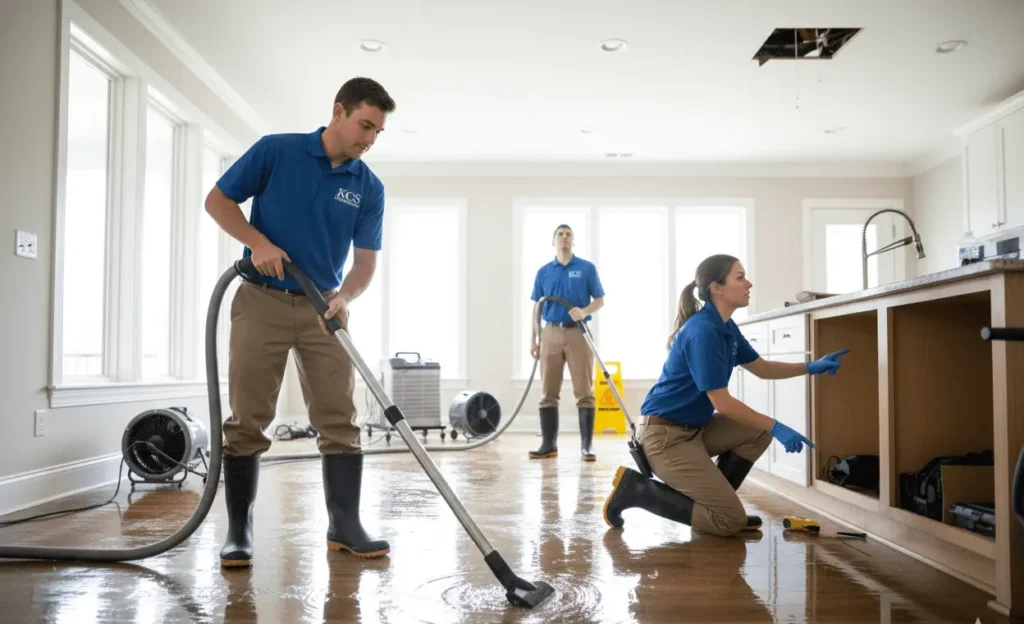
Our water damage restoration team has responded to countless post-storm calls across Cumberland County and surrounding areas where undetected moisture became a major mold crisis.
The Number One Hidden Danger: Crawl Spaces in NC Homes
Roughly 60 percent of NC homes are built over crawl spaces. These dark, damp, often unventilated areas are ground zero for black mold. Most homeowners never look down there. Moisture rises from the soil, condenses on structural wood, and mold begins growing completely out of sight. If you have not checked your crawl space in over a year, that alone is a reason to call a professional.
Where to Look for Black Mold in Your NC Home
Black mold is a hider. It rarely announces itself in plain sight. Here are the places to inspect first:
- Crawl spaces and basements: The most common growth zones in NC homes
- Under and behind bathroom vanities: Slow pipe leaks create perfect moisture traps
- Kitchen cabinets under the sink: A dripping pipe can go unnoticed for months
- Behind drywall near exterior walls: Especially after storms or heavy rain
- Inside HVAC systems and air ducts: Mold here spreads spores through every room
- Attics near roof penetrations: Any roof leak creates an immediate mold risk
- Around window frames: Condensation accumulates and feeds mold quietly
If you notice water stains, bubbling paint, or warped surfaces in any of these areas, do not wait. That is a red flag.
How to Identify Black Mold – Signs Most Homeowners Miss
Visual Warning Signs
Black mold typically appears as dark greenish-black patches with an irregular shape. It often has a slightly raised, fuzzy, or slimy texture. It tends to grow in clusters and expands outward from a central moisture source.
The Smell Test
Black mold has a distinctive musty, earthy odor that is often described as similar to rotting wood or wet soil. If a room smells stale even after cleaning and airing it out, mold may be growing somewhere hidden.
Physical Symptoms That Show Up First
Sometimes your body detects mold before your eyes do. Watch for these early warning signs:
- Persistent sneezing or runny nose with no obvious cause
- Itchy, watery eyes that worsen indoors
- Recurring headaches that clear up when you leave the house
- A cough or wheeze that has no clear medical explanation
- Skin irritation or rashes
These symptoms show up because mold spores are already airborne and being inhaled. If your symptoms improve when you travel or spend time outside, take that seriously.
Black Mold Health Risks – Who Is Most at Risk in Your Family?
Short-Term Symptoms of Exposure
Short-term exposure to black mold mycotoxins can cause throat irritation, nasal congestion, eye irritation, and coughing. Even a single exposure can trigger an allergic reaction in sensitive individuals.
Long-Term Health Consequences
Prolonged exposure is where things get serious. Chronic inhalation of mycotoxins has been linked to asthma development, immune system dysfunction, neurological symptoms like brain fog and memory issues, and in severe cases, respiratory infections.
High-Risk Groups
These family members face the greatest danger from black mold exposure:
- Children whose immune systems and lungs are still developing
- Elderly individuals with reduced immune function
- Pets who spend time close to the floor where spore concentrations are highest
- Anyone with asthma, allergies, or a compromised immune system
If anyone in your household falls into these categories and you suspect mold, getting a professional inspection is not optional. It is urgent.
Can You Remove Black Mold Yourself?
What DIY Methods Actually Do
Bleach, vinegar, and over-the-counter mold sprays can kill surface mold on non-porous materials like tile. But black mold rarely lives only on the surface. Its root structures, called hyphae, penetrate porous materials like drywall and wood. Spraying bleach on the surface addresses only what you can see, not what is actually growing.
DIY mold removal is not effective for black mold on porous surfaces. Bleach kills surface spores but does not reach the root structure of the mold, which allows it to regrow within weeks.
The Hidden Spread Problem
Disturbing mold without proper containment releases thousands of spores into the air. Those spores travel through your home via air currents and HVAC systems, creating new colonies in rooms that were previously clean. An untrained removal attempt can turn a localized problem into a whole-home infestation.
When DIY Is an Absolute No
Do not attempt DIY removal if:
- The affected area is larger than 10 square feet
- You have respiratory conditions or a weakened immune system
- Mold is inside your HVAC system or ductwork
- Mold is growing inside walls or under flooring
- The mold came back after a previous DIY attempt
What Professional Black Mold Remediation Actually Looks Like
When you call KCS Restoration, here is exactly what the professional process involves:
Step 1 – Inspection and Mold Testing A certified technician performs a thorough inspection using moisture meters and air quality testing to identify every affected area, including hidden zones behind walls and under floors.
Step 2 – Containment Plastic sheeting and negative air pressure machines seal off the contaminated area completely. This prevents spores from spreading during removal.
Step 3 – Safe Removal and Disposal All mold-affected materials are safely removed using HEPA-equipped vacuums and EPA-approved antimicrobial treatments. Contaminated materials are bagged and disposed of according to NC guidelines.
Step 4 – Air Purification and Post-Remediation Verification HEPA air scrubbers clean the air throughout the work area. After removal is complete, air quality testing is performed again to confirm the space meets safe standards.
Step 5 – Moisture Source Correction This is the step most DIY attempts skip entirely. Without fixing the underlying moisture problem, mold always comes back. KCS identifies and corrects the source so your home stays protected long-term.
Learn more about our full mold remediation process here.
How Much Does Black Mold Removal Cost in NC?
Black mold removal in North Carolina typically costs between $500 and $6,000 depending on the size of the affected area, location of the mold, and extent of structural damage. Crawl space remediation tends to fall on the higher end.
Factors That Affect the Price
- Size of the contaminated area
- Whether mold is inside walls, HVAC, or structural materials
- How long the mold has been growing
- Whether materials like drywall or flooring need replacement
Why Delaying Always Costs More
Mold grows. A small patch that costs a few hundred dollars to address today can spread into a multi-room infestation requiring structural repairs that cost several thousand dollars. Acting early is always the smarter financial decision.
Does Homeowners Insurance Cover Black Mold in NC?
When Insurance Typically Pays
Most NC homeowner policies will cover mold remediation when it is directly caused by a sudden, covered event, such as a burst pipe or storm flooding. In those cases, the mold damage is considered part of the original water damage claim.
When It Does Not Cover
Insurance typically does not cover mold that results from neglect, long-term humidity problems, or maintenance failures. If mold grew because a slow leak went unaddressed for months, most policies will deny the claim.
How KCS Helps You Navigate the Process
Our team at KCS Restoration has experience working alongside insurance adjusters throughout Fayetteville and the surrounding NC areas. We document damage thoroughly and help ensure you get the coverage you are entitled to. Contact us to discuss your situation before filing.
NC Mold Disclosure Laws – What Sellers and Buyers Must Know
North Carolina law requires home sellers to disclose known mold issues on the Residential Property Disclosure Statement. Failing to disclose known mold can expose sellers to serious legal liability, including lawsuits from buyers after closing.
For buyers, always request a mold inspection before closing, particularly in older homes or homes that have experienced any water damage. A clean remediation report from a certified professional like KCS Restoration also serves as legal documentation that the problem was properly addressed.
How to Prevent Black Mold from Coming Back
Prevention is where long-term protection begins. Here are the most effective steps for NC homeowners:
- Keep indoor humidity below 50 percent using dehumidifiers
- Inspect your crawl space at least twice a year
- Fix any leaks, no matter how small, within 24 to 48 hours
- Ensure your HVAC system is cleaned and inspected annually
- Install crawl space encapsulation if your home does not already have it
- After any storm or flooding event, call a water damage professional immediately
Why NC Homeowners Trust KCS Restoration
KCS Restoration is a locally based, certified restoration company serving Fayetteville and surrounding communities in North Carolina. We are IICRC certified, fully equipped for full-scale mold remediation, and committed to keeping NC families safe in their homes.
We are not a national chain. We are your neighbors. And we understand the specific moisture challenges that NC’s climate creates for local homeowners.
Our location: 2931 Hope Mills Rd, Fayetteville, NC 28306 Find us on Google Maps Call us today: (910) 635-9348
We offer free mold inspections. No pressure. No obligation. Just honest answers from a team that knows NC homes.
Frequently Asked Questions About Black Mold in NC
How fast does black mold spread in an NC home?
Under NC’s humid conditions, black mold can begin visible growth within 24 to 48 hours of a moisture event. Without intervention, it can spread to adjacent rooms within a few weeks.
How long does professional mold remediation take?
Most residential mold remediation projects in NC take between one and five days depending on the size and severity of the infestation. KCS provides a clear timeline during the initial inspection.
Can I stay in my home during black mold removal?
For small, isolated infestations, it may be possible to remain in other areas of the home. For larger projects or cases involving HVAC contamination, temporary relocation is usually recommended for health and safety.
Is black mold covered under a home warranty in NC?
Most standard home warranties do not cover mold remediation. Mold is typically classified as a maintenance issue. Check your specific warranty terms and speak with your provider directly.
How do I know if mold is completely gone after remediation?
Post-remediation verification through air quality testing is the only reliable way to confirm mold has been fully removed. KCS Restoration includes this step in every professional remediation project.
Does black mold always have a smell?
Not always, especially in early stages. Some hidden mold behind walls or under floors may not produce a noticeable odor until the colony is well established. Rely on professional testing if you have any doubt.
Your Next Step Starts Here
Black mold in an NC home is not something that gets better on its own. It grows. It spreads. It affects the health of everyone living under that roof. And in North Carolina’s humid climate, the conditions that feed it are almost always present.
The good news is that professional remediation, done right the first time, stops it completely.
KCS Restoration is ready to help. Whether you have spotted visible mold, noticed a suspicious odor, or simply want peace of mind after a recent water event, our certified team will give you honest answers and a clear plan.
Call (910) 635-9348 today or visit our website to schedule your free mold inspection.
Because the best time to address black mold is before it gets worse. And that time is right now.