Table of Contents
- Water Just Damaged Your Home. The Next 4 Hours Will Determine Everything.
- The Hidden Clock Running Against You Right Now
- Immediate Steps to Take After Water Damage in Your NC Home
- What NOT to Do After Water Damage
- Common Causes of Water Damage in Fayetteville and Cumberland County NC
- Does Homeowners Insurance Cover Water Damage in NC?
- Why Fayetteville NC Homeowners Call KCS Restoration First
- Frequently Asked Questions About Water Damage in NC
- Don’t Let Water Damage Turn Into a Bigger Disaster
Water Just Damaged Your Home. The Next 4 Hours Will Determine Everything.
You walked into your home and felt it before you even saw it.
That soft squish under your feet. The smell of wet drywall. Water creeping across your floor from somewhere it should never be.
Your heart drops. Your mind races. And the very first question that hits you is: what do I do right now?
Here is the truth most restoration companies won’t tell you upfront. The water itself is not always the biggest problem. The biggest problem is what happens during the hours you spend standing there unsure of what to do next.
Most NC homeowners lose thousands of dollars not because of the water but because of the decisions they make, or don’t make, in the first four hours.
This guide will walk you through exactly what to do, what to avoid, and how to protect your home, your family, and your finances from the moment water damage hits. Whether you are dealing with a burst pipe in Hope Mills, storm flooding in Cumberland County, or a slow appliance leak that finally gave out, this is your step-by-step crisis plan.
Need help right now? Call KCS Restoration at (910) 635-9348. We are on-site anywhere in Fayetteville in 60 minutes or less, 24 hours a day, 7 days a week.
The Hidden Clock Running Against You Right Now
What Happens to Your Home in the First 24 to 48 Hours
Water does not sit still. From the moment it enters your home, it moves. It seeps into floorboards, soaks into drywall, travels up walls through capillary action, and hides inside insulation where no one can see it.
Here is what the clock looks like inside a water-damaged NC home:
- Within 1 to 2 hours: Water soaks into flooring, baseboards, and lower walls. Drywall begins absorbing moisture.
- Within 4 to 6 hours: Furniture swells and warps. Fabrics become saturated. Odor begins.
- Within 24 hours: Mold spores begin to activate. Structural materials weaken. Wood starts to buckle.
- Within 48 hours: Mold growth becomes visible. Drywall may need full replacement. Repair costs escalate significantly.
- After 72 hours: Serious structural damage is likely. Health hazards increase. Your insurance claim process becomes more complicated.
That timeline is not designed to scare you. It is designed to help you understand that fast action is not optional. It is everything.
The Mold Timeline Every NC Homeowner Needs to Know
North Carolina’s warm, humid climate makes mold growth faster here than in most other states. Fayetteville summers average high humidity levels that accelerate moisture absorption in building materials.
Mold can begin colonizing in as little as 24 hours after water exposure. Once it starts, it spreads fast and hides inside walls, under flooring, and in crawl spaces where it is nearly impossible to detect without professional equipment.
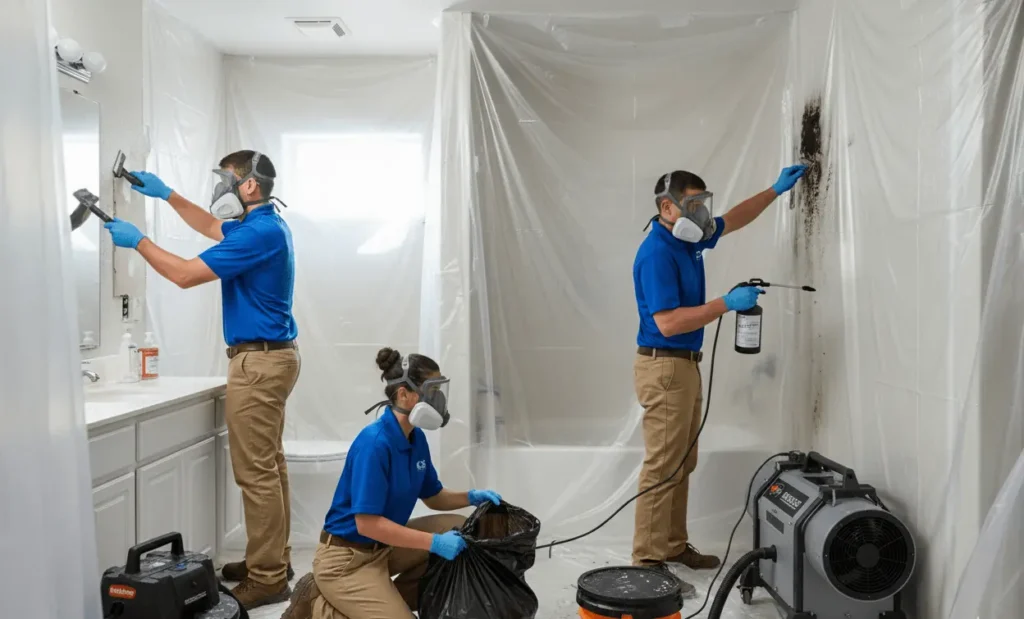
If you suspect any mold risk after water damage, KCS Restoration’s mold remediation team in Fayetteville can inspect, contain, and eliminate it before it becomes a health crisis.
Immediate Steps to Take After Water Damage in Your NC Home
After water damage, immediately ensure safety, stop the water source, document the damage, remove standing water, begin drying, protect belongings, and call a certified local restoration company. Acting within the first two hours significantly reduces repair costs and mold risk.
Follow these steps in order. Do not skip ahead.
Step 1: Prioritize Safety Before Anything Else
Before you touch a single thing, ask yourself: is it safe to be in this space?
Check for these hazards first:
- Standing water near electrical outlets, panels, or appliances
- Sagging ceilings that could collapse
- Sewage odor indicating contaminated water
- Structural damage to floors or walls
If any of these are present, leave the area and call for professional help immediately. Water and electricity are a deadly combination. No flooring or furniture is worth your life.
Step 2: Shut Off the Water Source
If the water is still flowing, your first job is to stop it.
- Burst pipe: Turn off your main water shutoff valve. In most Fayetteville homes, it is located near the water meter, in the crawl space, or in a utility closet.
- Appliance leak: Turn off the water supply line directly behind the appliance.
- Storm or roof-related flooding: Use towels, buckets, or tarps to limit additional water entry until help arrives.
Stopping the source stops the damage from multiplying. Every minute water keeps flowing is more square footage affected.
Step 3: Turn Off Electricity to Affected Areas
Go to your breaker box and cut power to any rooms with water damage. If your breaker box is in a flooded area, do not touch it. Call an electrician or your restoration team first.
This step protects you during cleanup and protects the technicians who will arrive to help.
Step 4: Document All Damage Before Touching Anything
Pull out your phone and start recording. Walk through every affected room and capture:
- Standing water levels
- Damaged walls, floors, and ceilings
- Soaked furniture, electronics, and personal items
- The visible source of the water
This documentation is critical for your homeowners insurance claim. The more evidence you have before cleanup begins, the smoother your claim process will be.
Step 5: Remove Standing Water If It Is Safe to Do So
If the area is electrically safe and the water is clean, you can begin removing standing water using:
- Mops and absorbent towels for smaller amounts
- A wet/dry vacuum for moderate water levels
- Buckets to remove large pooled areas manually
Do not use a regular household vacuum. It is not designed for water and can become an electrical hazard or permanently damaged.
Step 6: Begin Ventilating and Drying the Space
Open windows and interior doors to create airflow. Set up fans if you have them. Run your dehumidifier if you own one.
These steps help slow moisture absorption while you wait for professionals. However, be aware that household fans and dehumidifiers cannot reach moisture inside walls, subfloors, or insulation. That requires industrial-grade equipment.
Step 7: Protect and Relocate Salvageable Belongings
Move furniture, rugs, clothing, and valuables out of the affected area. Place aluminum foil or wood blocks under furniture legs sitting on wet floors to prevent staining and further damage.
Prioritize:
- Important documents and photos
- Electronics
- Irreplaceable personal items
- Medications
Items that have been soaked for more than 24 hours in contaminated water should not be salvaged without professional assessment.
Step 8: Call a Local NC Water Damage Restoration Company
This is the most important step on this entire list.
Professional restoration is not just about removing water. It is about finding every pocket of hidden moisture that household tools cannot detect, stopping mold before it starts, restoring structural integrity, and documenting everything your insurance company needs.
The water damage restoration team at KCS Restoration uses thermal imaging cameras, industrial extractors, and IICRC-certified drying processes to restore your home completely, not just on the surface.
Call us now at (910) 635-9348. We respond in 60 minutes anywhere in Cumberland County.
What NOT to Do After Water Damage in Your NC Home
This section is where most homeowners make costly mistakes. Knowing what to avoid is just as important as knowing what to do.
Do Not Use a Regular Vacuum or Household Fan as Your Only Solution
A regular vacuum can become permanently damaged and electrically dangerous around water. And a household fan only moves surface air. It does not pull moisture from inside your walls or under your subfloor. Skipping professional drying equipment almost always leads to hidden mold weeks later.
Do Not Wait to See If It Dries on Its Own
This is the single most expensive mistake NC homeowners make. Water that looks like it is drying on the surface is still soaking deeper into your home’s structure. What appears dry in two days can be harboring active mold growth inside walls for weeks before you smell or see it.
Do Not Throw Away Damaged Items Before Insurance Documents Them
Your insurance adjuster needs to see the damage. Removing items before documentation could lower your claim payout or give your insurer a reason to dispute coverage. Photograph and catalog everything before disposing of anything.
Do Not Skip the Crawl Space Inspection
This is especially important for Fayetteville homes. Many properties in Cumberland County are built with crawl spaces that are highly vulnerable to flooding and moisture intrusion. Water damage in a crawl space can rot structural beams, create serious mold colonies, and go undetected for months. Always have your crawl space inspected after any water event.
Common Causes of Water Damage in Fayetteville and Cumberland County NC
Understanding what caused your water damage helps your restoration team respond faster and helps you prevent it from happening again.
Hurricane and Severe Storm Flooding: North Carolina sits directly in the path of Atlantic hurricane season. Even storms that do not make direct landfall can dump inches of rain across Cumberland County in hours, overwhelming drainage systems and flooding basements and crawl spaces.
Burst Pipes and Aging Plumbing: Older homes in Fayetteville and Hope Mills often have plumbing systems that are decades old. Cold snaps during NC winters can freeze pipes and cause them to burst, releasing hundreds of gallons of water in a short time.
Crawl Space Moisture and Flooding: The soil composition and seasonal rainfall in this region make crawl space flooding extremely common. Without proper vapor barriers and drainage, moisture accumulates and causes long-term structural and air quality damage.
Appliance Failures and HVAC Leaks: Washing machine hoses, water heaters, refrigerator lines, and HVAC condensate drains are among the leading sources of slow, hidden water damage in NC homes. These leaks often go unnoticed until serious damage has already occurred.
Does Homeowners Insurance Cover Water Damage in NC?
Most NC homeowners insurance policies cover sudden and accidental water damage such as burst pipes or appliance failures. However, flooding from storms or rising groundwater typically requires a separate flood insurance policy. Document everything immediately and contact your insurer within 24 hours.
What Is Typically Covered vs. What Is Not
| Typically Covered | Typically NOT Covered |
| Burst pipes | Flood water from storms |
| Appliance leaks | Gradual leaks from neglect |
| Sudden roof leaks | Sewage backup (without rider) |
| Accidental overflow | Groundwater seepage |
How to File a Water Damage Claim in North Carolina
- Call your insurance company within 24 hours of the damage
- Provide your photo and video documentation
- Request a claim number and adjuster visit
- Do not make permanent repairs before the adjuster inspects
- Get a written restoration estimate from your contractor
For additional guidance, the NC Department of Insurance provides homeowner resources on navigating property damage claims.
How KCS Restoration Helps With Your Insurance Documentation
KCS Restoration works directly with all major insurance providers. We provide detailed moisture mapping reports, damage assessments, and itemized restoration estimates that give your adjuster everything needed to process your claim quickly. We take that burden off your plate so you can focus on your family.
Why Fayetteville NC Homeowners Call KCS Restoration First
When water damage strikes in Fayetteville, Hope Mills, or anywhere in Cumberland County, homeowners need one company they can trust completely. Here is why KCS Restoration is that company.
IICRC-Certified Technicians Available 24 Hours a Day
Every technician on our team is certified by the Institute of Inspection Cleaning and Restoration Certification, the gold standard for restoration professionals. We train continuously so your home is always handled with the highest level of expertise.
On-Site in 60 Minutes or Less
Water damage does not wait for business hours and neither do we. Our Fayetteville NC restoration team dispatches immediately when you call. We arrive equipped with truck-mounted extractors, thermal imaging cameras, industrial dehumidifiers, and air movers ready to work from the moment we step through your door.
We Handle the Work and the Insurance Paperwork
From water extraction and structural drying to mold prevention and full property restoration, KCS handles every step under one roof. No juggling multiple contractors. No confusing insurance back-and-forth. Just one trusted local team from start to finish.
Visit us at 2931 Hope Mills Rd, Fayetteville, NC 28306 or find us on Google Maps.
Frequently Asked Questions About Water Damage in NC
How quickly does mold grow after water damage in NC?
Mold can begin growing in as little as 24 to 48 hours after water damage, especially in North Carolina’s warm and humid climate. Fayetteville’s seasonal conditions accelerate this timeline. Professional drying and moisture removal within the first few hours is the most effective way to prevent mold growth entirely.
Can I clean up the water damage myself?
Minor surface water from a small spill or contained appliance leak can sometimes be handled with household tools. However, any water damage involving large volumes, soaked walls or flooring, crawl spaces, or potential contamination requires professional restoration. Hidden moisture missed during DIY cleanup almost always leads to mold and costly structural repairs later.
How much does water damage restoration cost in Fayetteville NC?
The average cost of water damage restoration in the Fayetteville area ranges from $2,000 to $8,000 depending on the size of the affected area, water category, and materials involved. Acting quickly significantly reduces costs. Most homeowners insurance policies cover a large portion of eligible restoration expenses.
What should I do if water damage happens at night or on a weekend?
Call KCS Restoration immediately at (910) 635-9348. We operate 24 hours a day, 7 days a week, including holidays. Water damage does not wait for Monday morning and neither do we. Our emergency team dispatches within minutes of your call anywhere in Cumberland County.
Is water damage covered by homeowners insurance in North Carolina?
Sudden and accidental water damage, such as from a burst pipe or appliance failure, is typically covered by standard NC homeowners insurance. Flooding from storms or groundwater requires separate flood insurance. Always document damage thoroughly and contact your insurer within 24 hours of the event.
Don’t Let Water Damage Turn Into a Bigger Disaster
Water damage is overwhelming. But the path forward is clear when you know the steps.
Act fast. Stay safe. Document everything. And call a local NC restoration expert you can trust before that 24-hour mold clock runs out.
Every hour you wait is an hour water is working deeper into your home’s structure. The good news is that fast, professional action can stop that damage in its tracks and restore your home completely.
KCS Restoration has helped homeowners across Fayetteville, Hope Mills, and Cumberland County recover from water damage, mold, and more. Our certified team is ready right now to protect your home and walk you through every step of the recovery process.
Whether you need immediate water damage restoration, mold remediation, or guidance on what comes next, KCS Restoration is one call away.
Call us now at (910) 635-9348. We will be at your door in 60 minutes.
Located at 2931 Hope Mills Rd, Fayetteville, NC 28306. Serving all of Cumberland County and surrounding areas 24/7.